
Going on a Design Journey with Young People
Engaging young people in how we design our spaces is often an uninspiring and unproductive process. Few engagement platforms are designed for young people, and there is an assumption that they wouldn’t be interested in being part of the conversation.
When young people are asked for their opinions, it’s often about one site in isolation- a playground or a skate park for example- without any consideration of the way young people actually use their neighbourhoods, going to different spots for different things.
And older teenagers and young people are in particular need of better provision. In these workshops, and in our wider consulting work, many teenagers report that they have nowhere to go, as they are considered too old for playgrounds, but struggle to find anywhere they feel welcome to spend time and play together.
With Happenings we set out to design a tool that was playful and interactive, captured the complex picture of how young people use their neighbourhoods, and offered immediate insights that the young people could use in their own lives.
To do this we worked with 86 young people in 15 different groups and settings. Over 5 design cycles of live user testing and technical development, we built a mapping toolkit that gathers rich data that local authorities and other decision makers can use when creating neighbourhood, town and local plans.
‘I got to talk about my favourite place. I liked connecting the places to each other.’ - Girl Guides Participant
Happenings was developed with the Public Map Platform, led by the University of Cambridge with Cardiff University and Wrexham University. As a Green Transition project, the PMP aligns with the Well-being of Future Generations Act, which demands that the wellbeing of future generations is accounted for when making decisions about public space and public services.
This gave us a framework and mandate to embark on designing with a focus on young people and their wellbeing.
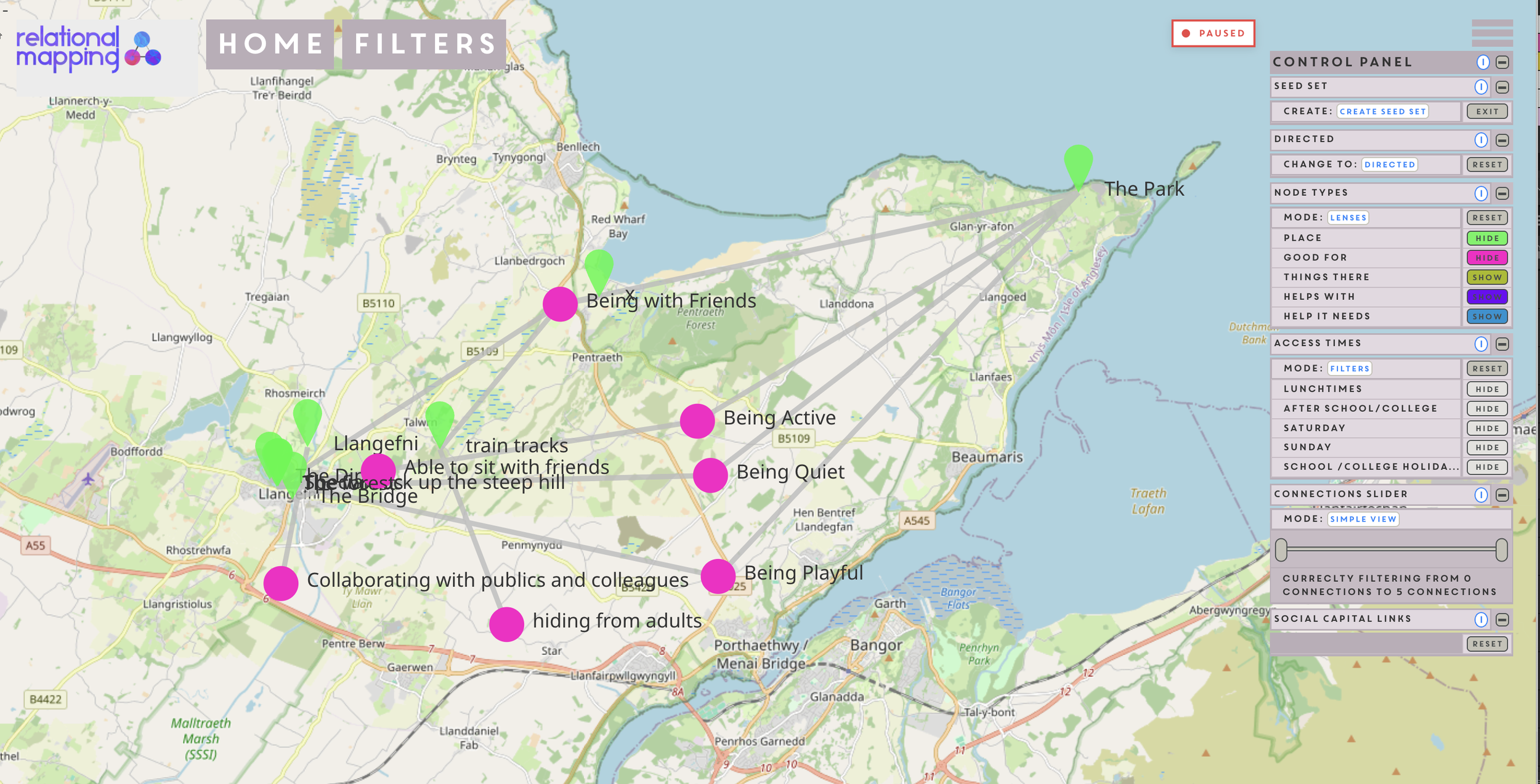
With our Relational Mapping approach we were able to invite young people to think about all the spots in their neighbourhood in relation to each other- how they have characteristics and attributes suitable for different moods and circumstances- and how all those make up the factors of wellbeing for a young person.
By taking a holistic view of the young people’s lives, the data we generate is richer: multiple places and attributes are considered in context, which offers a range of options to decision makers and planners.
‘It’s made me think about my environment, where I live and other things that can give me opportunities to help out or get involved.’ - Girl Guides Participant
Key developments
The key framework of gathering data with young people: where is it, what’s there, and what does it mean for your wellbeing. And all of these linked relationally so that we can see how places that might seem very different actually share characteristics.
The creation of the Gaps layer. It’s important for thinking about barriers to access, and young people really want to talk about where they would like to go but can’t.
The provision of a Future Map layer for young people to design a place they’d like to exist in the future. This final map acts as a celebratory point that brings together the new layered awareness the participants have of how they use their places, and gets them using some imagination and design thinking to leave the workshop feeling positive.
Asking what kind of care places need from young people sets up the idea of reciprocity.
‘I feel like I've indulged in this more than I do in my lessons. I feel like I could actually tell you what was spoken about here, because you didn’t just have us focussed on one thing, you had us very involved. It made me think about the places I appreciate.’ - Youth Club Participant
Our first case study: engaging young people in the creation of Bradford-on-Avon’s neighbourhood plan
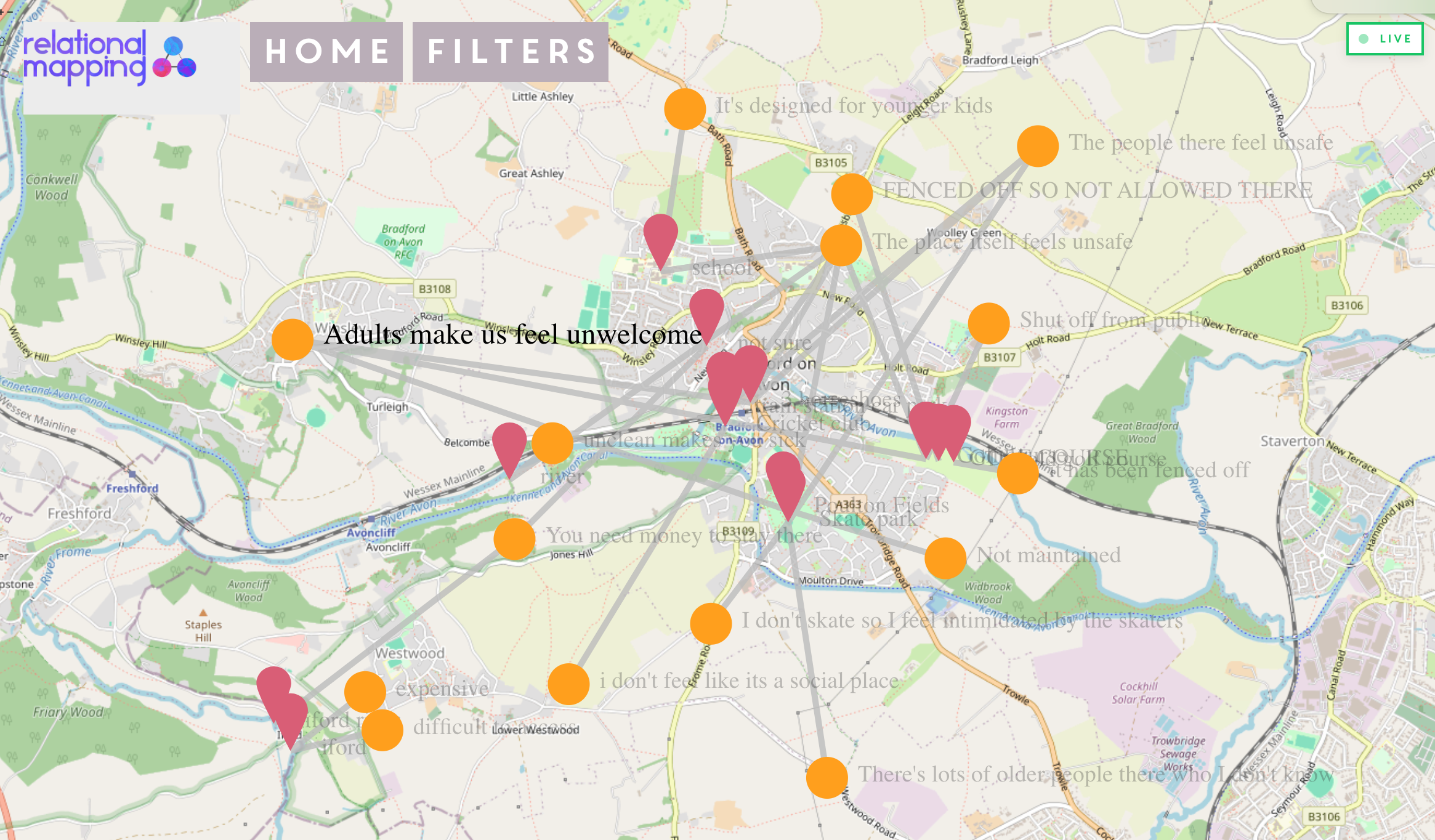
Having established the value of using Happenings to consult 16-18 year olds, we are now working with the Quality of Life Foundation and Place Studio to explore how it usefully integrates young people’s voices into the creation of a neighbourhood plan.
Place Studio had been commissioned by Bradford-on-Avon council to lead on the development of their neighbourhood plan. We ran a workshop with 12 sixth formers at St Laurence Sixth Form exploring how they relate to the area, what is missing, and what they would like to see in the future. We also used social mapping tools to consult younger children.
Working on the neighbourhood plan gave us a valuable opportunity to test out future uses of Happenings, and consider how the tool can be used to involve young people in decision making in their area through affecting policy, planning, and sharing their views in a way that can influence local authorities.